Your road to 100G

Elias
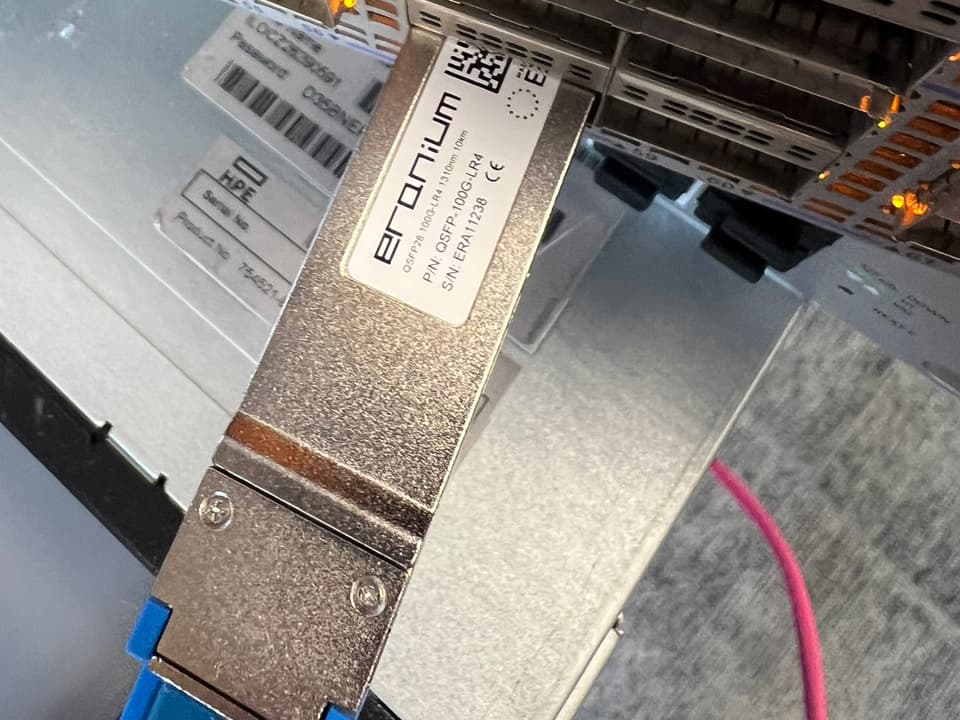
Some people have noticed the absence of 10G transceivers in our Paris PoP, while we actually do sell 10G connections at this location.
This is powered by a new innovation, enabling us to reduce overhead, inventory, and spare part counts; running 10G-LR media straight into a 100G-LR4 transceiver, performing the Eranium Magic, and making it work 😎
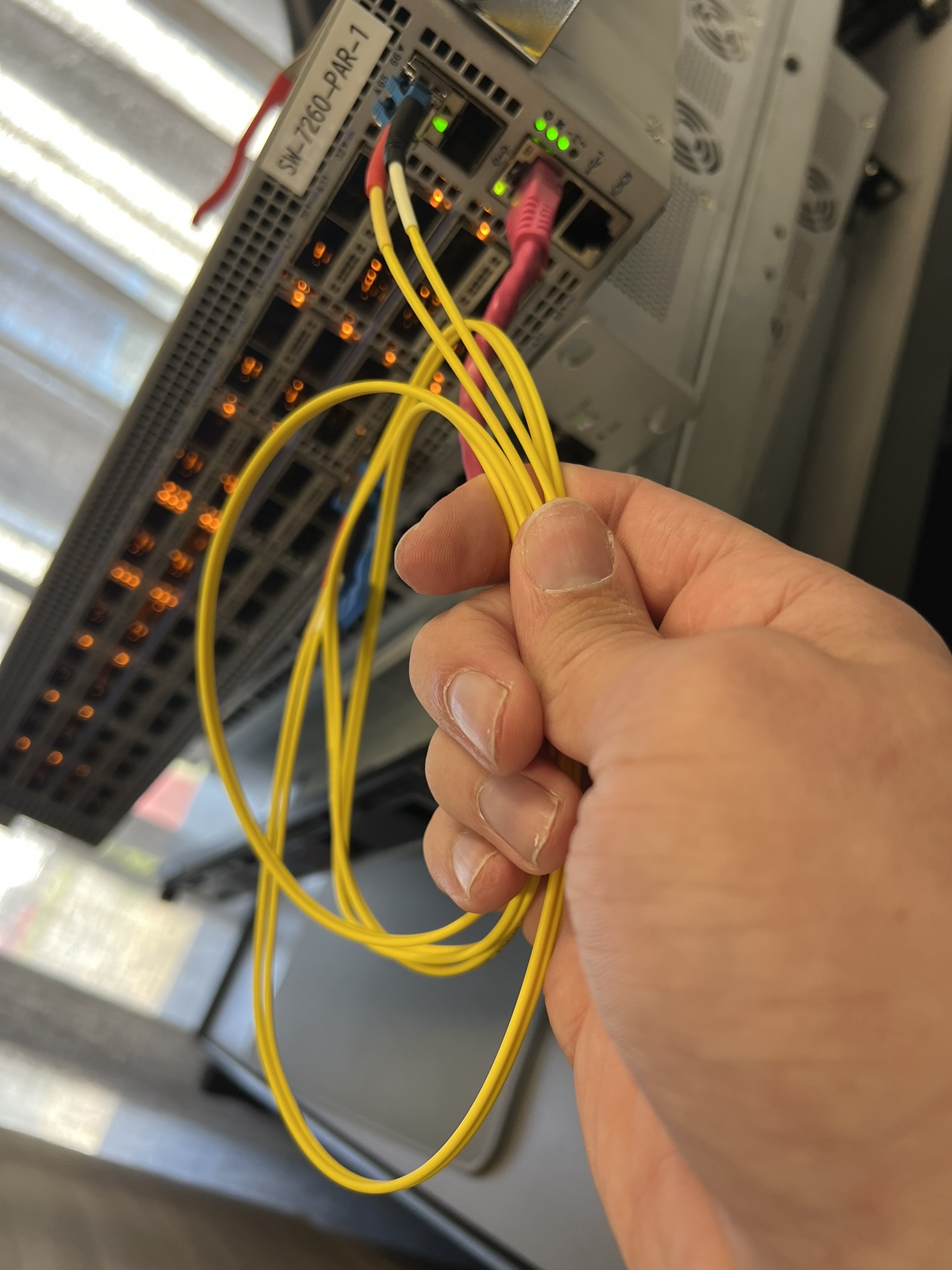
Our stake 😎
The run rate for 10G connections is relatively low, meaning it's difficult to predict how many we should keep in stock to keep the deliveries flowing smoothly; this involves no additional parts, hardware, or otherwise expensive changes. As the ports are the same physical setup, there is no overhead in keeping spares or stock for the differing kinds of media. This also makes the pop less technically complex, as all cables can be connected in the same fashion.
🥞 Smooth upgrades
We can switch our transceiver compatibility from 10G-LR to 100G-LR4 on the fly, while in the switch, remotely. Meaning we do not need to involve remote hands or perform any physical work when upgrading a connection from 10G to 100G in Paris. Less overhead for us, meaning we get to provide services at fair prices, while operating a sustainable exchange.
Final words
In production, we've found most members still want to connect using 100G-LR4 media, and we don't mind. The 100G-LR4 transceivers have, in our experience, turned out to be more reliable and power efficient than their 100G-LR1 counterparts, this is most likely caused by the DSP having to perform less math inside the transceiver. The failure mode of 100G-LR4 is, usually, also more graceful than 100G-LR1 (media errors vs flaps).
No need to be pushy about which transceiver members wish to use to connect (100G-LR1, anyone?)